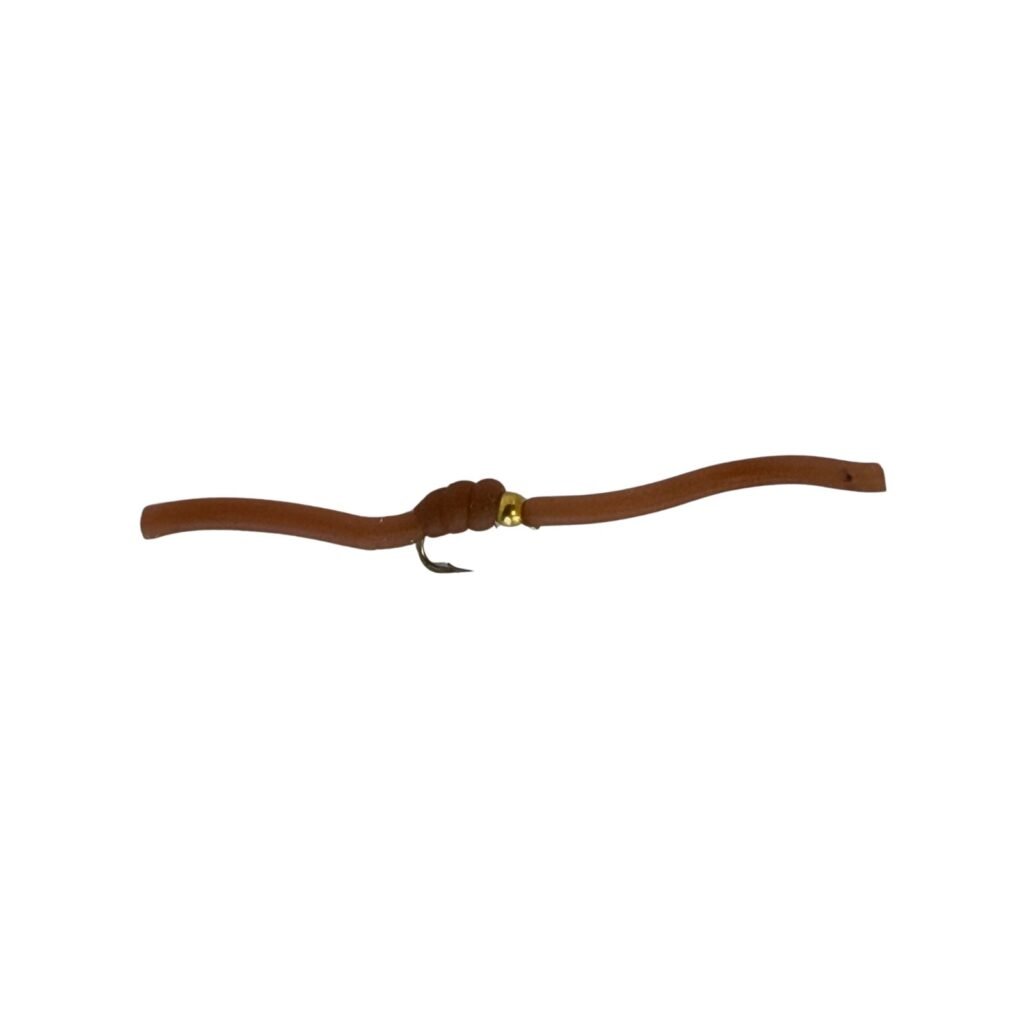
Worm
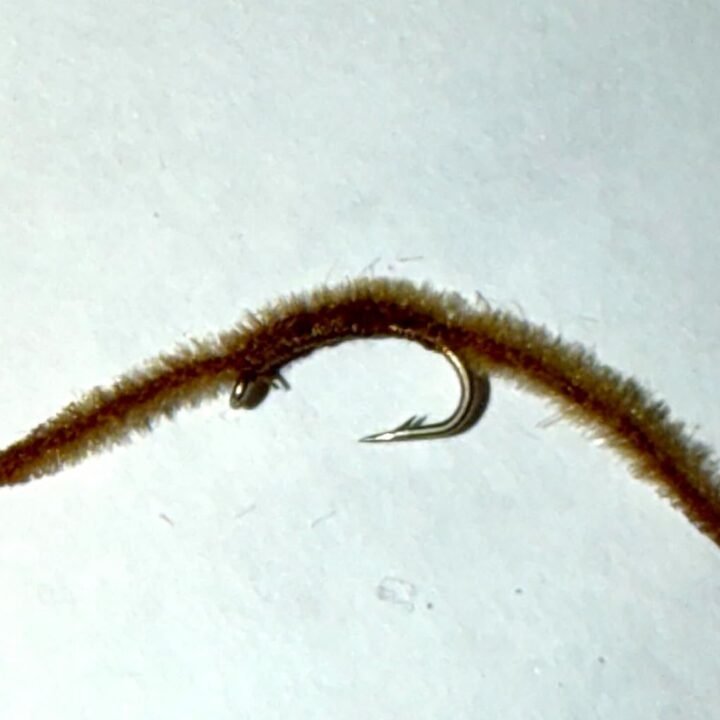
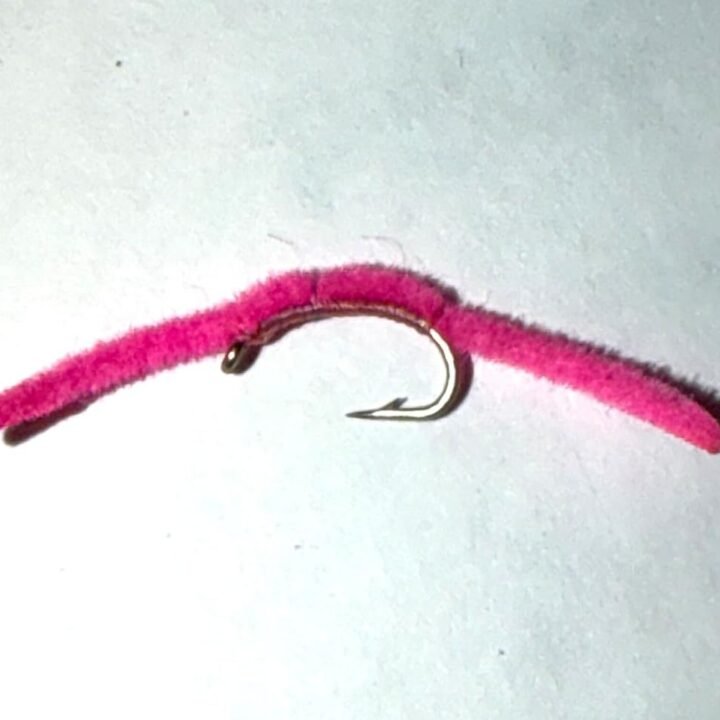
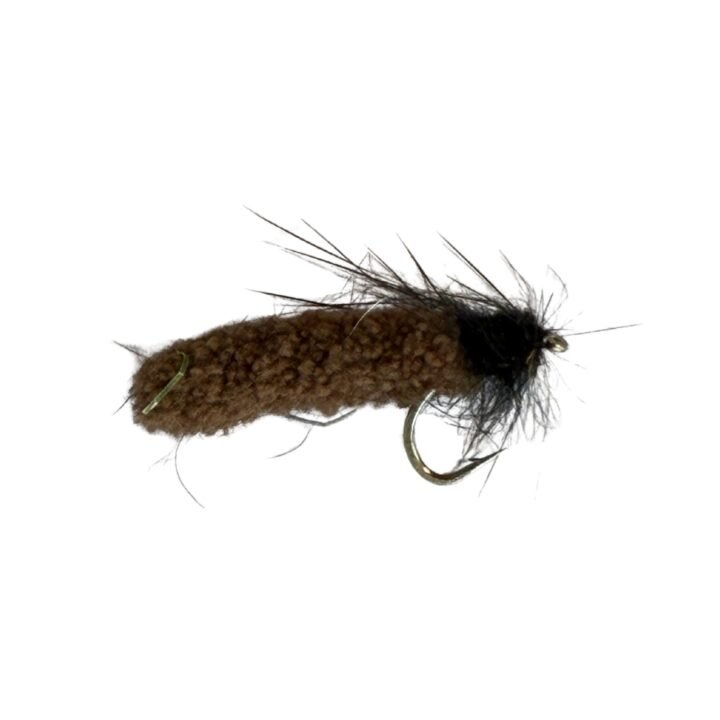
The worm that will not hold still — silicone that writhes in the current on a dead drift.
Available at Amazon and Walmart
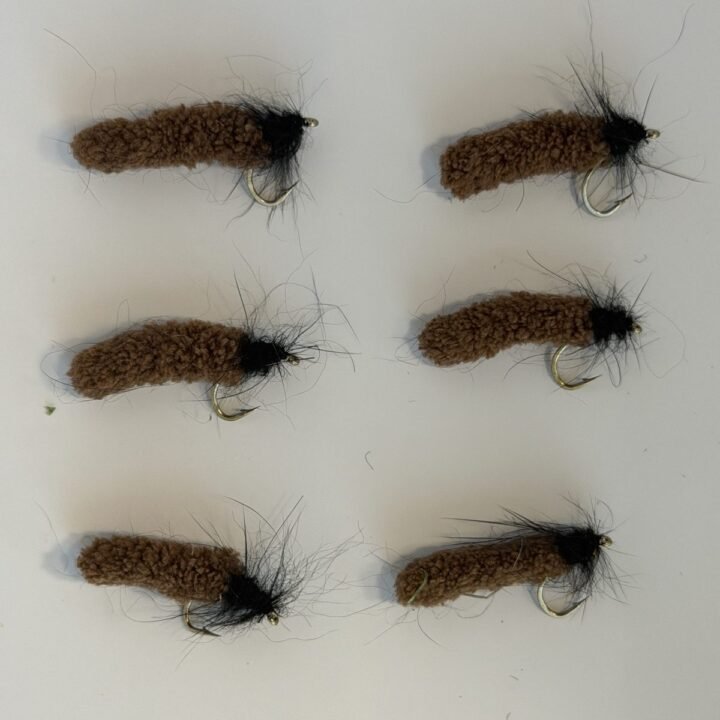
Choose a colour Size 14 · Brown · 12 pack
How to fish it
Deep dead drift under an indicator, point fly. After rain or a release, fish it through the same water you would normally nymph but two feet deeper. Takes are usually hard.
Go deeper than you think. In high water the fish have dropped to the bottom and moved to the edges, and a rig set for normal flows will run two feet over their heads all day. Add weight, lengthen the indicator, and accept that you will hang up occasionally — in these conditions that is the sign you have it about right.
Do not strike hard. Takes on a worm in high water tend to be confident and the hook is usually already in the corner of the mouth, so a violent set is the quickest way to tear silicone off a hook. Lift and hold rather than snapping.
The worm that will not hold still — silicone that writhes in the current on a dead drift.
The Squirmy Worm replaced chenille with stretchy silicone, and the difference is movement. On a dead drift the material never stops undulating, which is exactly what a dislodged aquatic worm does and exactly what a chenille worm cannot do.
It is the high-water fly, the dirty-water fly, and the fly to try when a river has just been released. Brown and red are naturals, pink is the stained-water option, tan is for clear low flows.
The material is fragile and that is the cost of it. Silicone tears where chenille would hold, and a Squirmy that has caught four fish is usually a Squirmy that needs replacing — which is why they are sold twelve to a pack. The movement is worth the attrition: nothing else on a dead drift keeps working when the fly itself is doing nothing.
More patterns