
Nymph
Ugly, unsporting, and one of the most effective flies you can put on a nymph rig.
Available at Amazon and Walmart
Choose a colour Size 12 · Brown · 6 pack
How to fish it
Point fly on an indicator rig, deep and slow. It also fishes well on the swing at the end of the drift. In dirty water after rain, this is the first fly to try.
It fishes best in the first hours of a rise in flow, before the water has properly coloured. Trout move to the edges as the current builds, so shorten your casts and fish the two feet closest to the bank you are standing on. The lie you would normally wade straight through is often the productive one on a rising river.
White is the choice once visibility drops far enough that a natural colour disappears, and brown or tan as the water starts to clear. If none of the three produce in high water, the fish have usually dropped into the slowest water they can find rather than stopped feeding — the fix is to go looking for softer water, not to keep changing colour.
Ugly, unsporting, and one of the most effective flies you can put on a nymph rig.
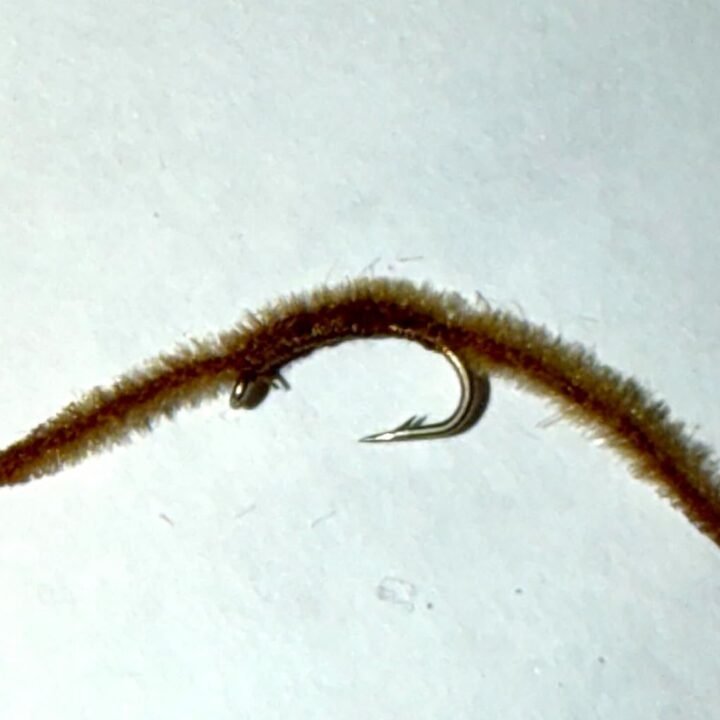
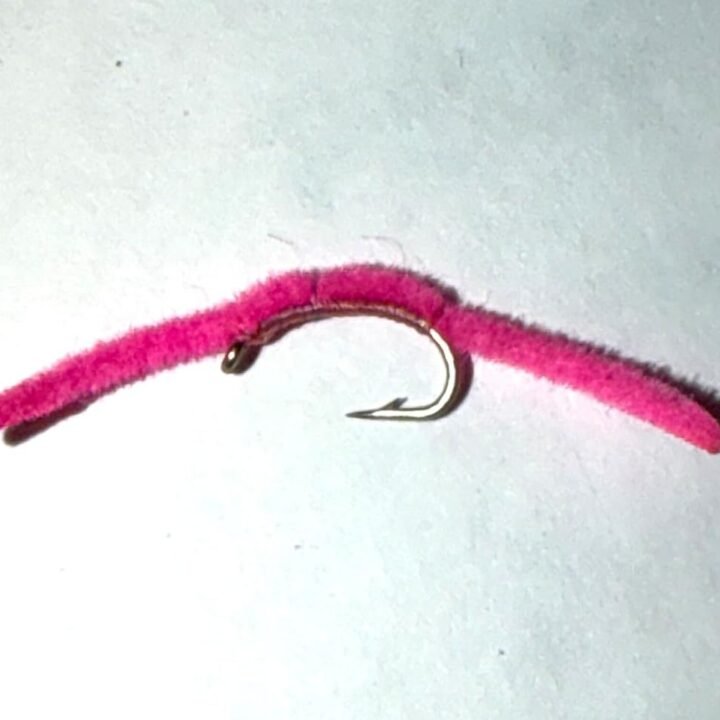
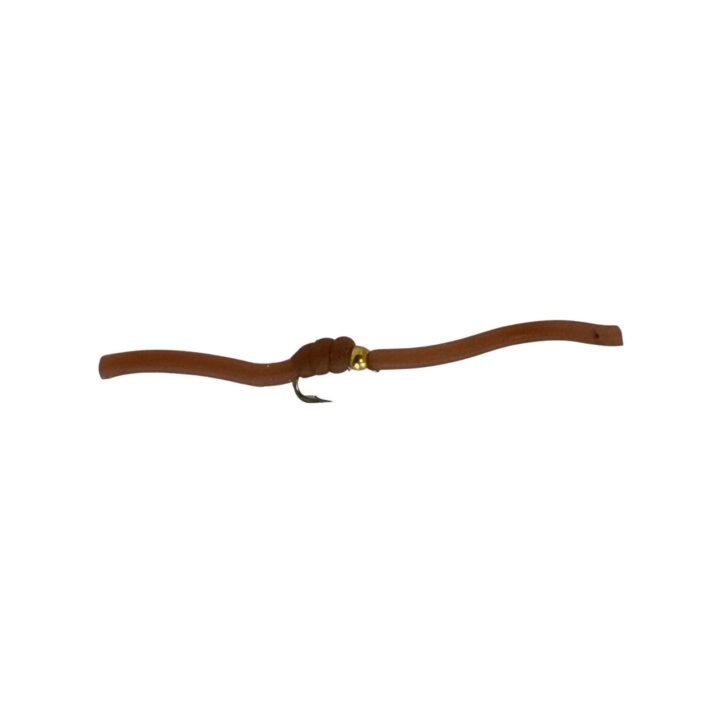
The Mop Fly is a length of chenille mop fibre on a hook, and it works because it moves exactly like a crane fly larva — a fat, soft, wriggling thing that trout eat without hesitation. Reputation aside, it is a genuine imitation of a real food item, and it is at its best in high or off-colour water when fish need something they can find.
Brown and tan are the natural crane fly shades; white shows up in stained water and after a release. Size 12 in a six-pack.
The argument against it is aesthetic and the argument for it is evidence. Crane fly larvae are common in silty margins, they are fat, pale and slow, and when a river comes up they wash out in numbers — so a fly that moves like a soft grub in the current is imitating something real. That is worth saying plainly rather than defending it as an attractor.
More patterns