
Terrestrial
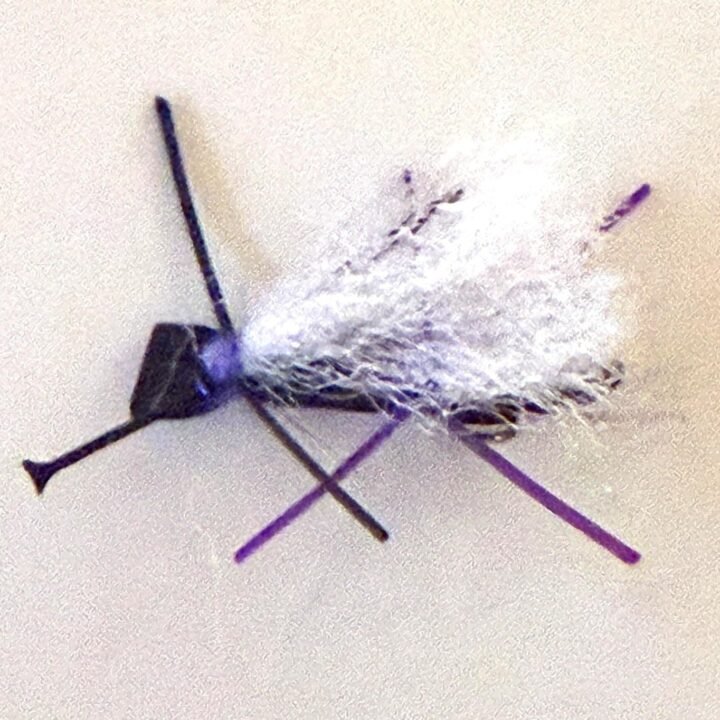
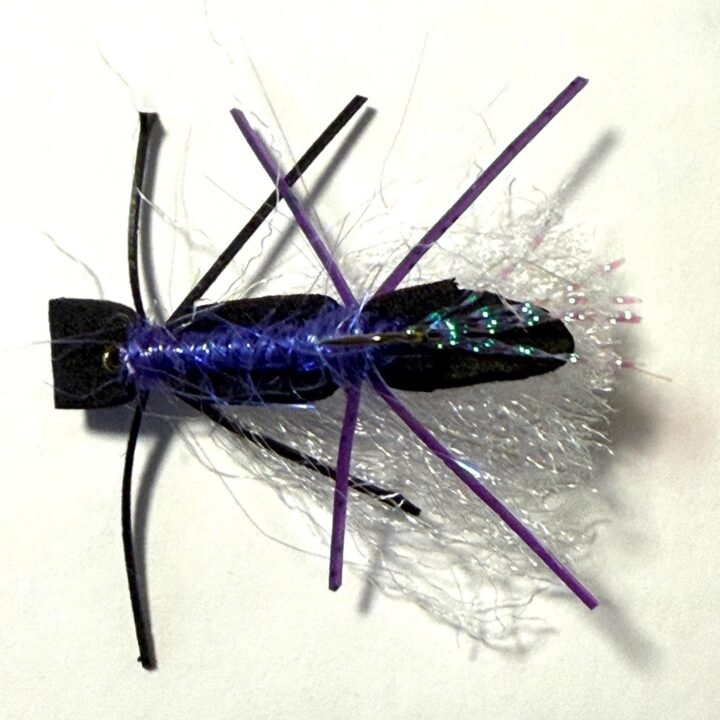
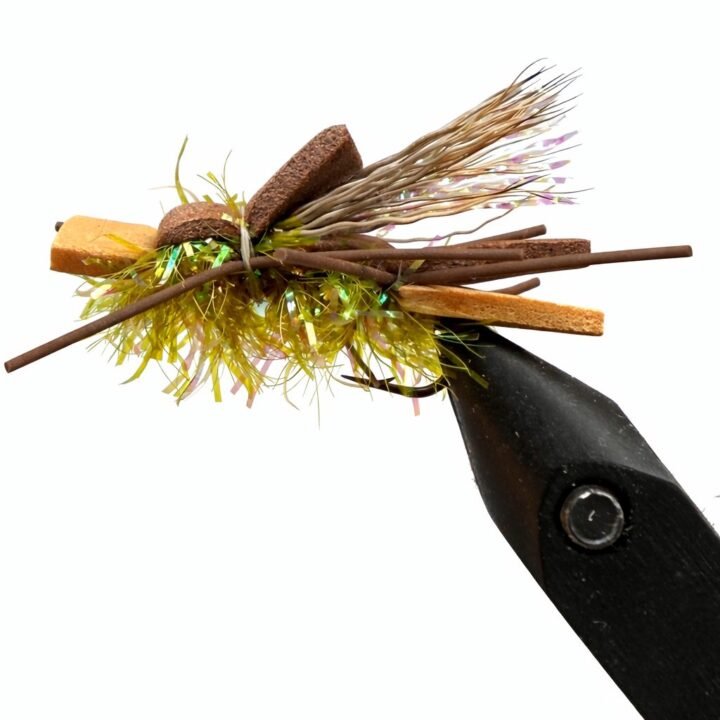
A hopper that lands flush in the film instead of perching on it — which is how a drowning grasshopper actually sits.
Available at Amazon and Walmart
How to fish it
Cast tight to grassy banks — within inches — and let it land with some weight behind it. Dead drift it along the bank seam. Windy afternoons are the best hopper conditions of the year.
Land it hard and close. A grasshopper does not settle onto the water, it falls in, and the sound of it hitting is part of what brings a trout over — so aim at the bank itself and let the fly drop the last few inches rather than trying to place it delicately. A cast that slaps six inches out from the grass is doing exactly what it should.
Wind is the condition, not the obstacle. The best hopper afternoons of the year are the ones where casting is unpleasant, because that is when the naturals are being blown off the bank, and fish move to the edges to wait for them. If a calm morning is producing nothing on this fly, that is not a reason to change pattern — it is a reason to come back at three.
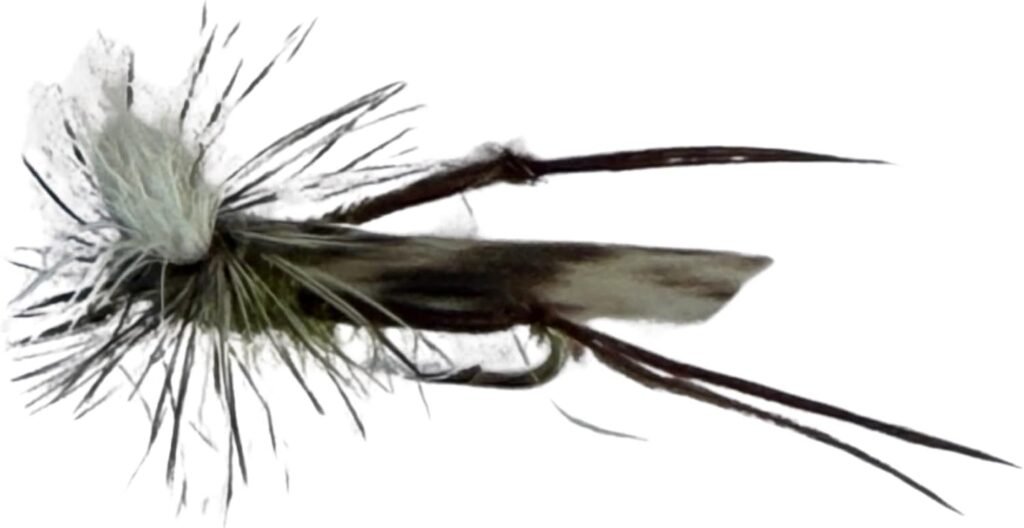
A hopper that lands flush in the film instead of perching on it — which is how a drowning grasshopper actually sits.
Most hopper patterns float high on a hackle collar. A real grasshopper on the water is half-submerged, struggling and going nowhere. Ed Schroeder’s parachute design drops the body into the film and puts the hackle horizontal, which produces a silhouette much closer to the natural — and on hard-fished water that difference shows up in the refusal rate.
Olive, size 16, for late summer and autumn when grasshoppers are in the grass along every bank.
A size 16 hopper looks wrong in the hand and right on the water. The big foam hoppers are tied for freestone rivers where a trout has half a second to decide, but on a spring creek or a tailwater the same fly gets refused all afternoon — the fish have time to look, and a size 8 is more grasshopper than anything on that bank has ever been. Sixteen is the size that gets eaten by fish that are paying attention.
More patterns