
Dry Fly
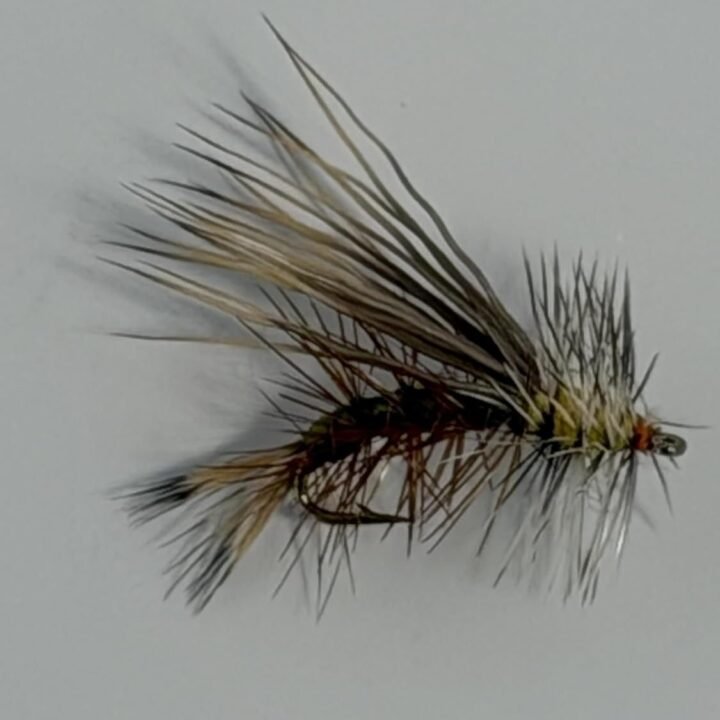
Elk Hair Caddis
Al Troth’s caddis dry — floats in water that drowns everything else.
Available at Amazon and Walmart
- Hook size
- 18
- Imitates
- Caddis
- Best water
- Freestone River, Spring Creek, Tailwater
- Colour
- Natural
- Pack
- 12 flies
How to fish it
Fishing notes
Fish it dead drift first. If that draws refusals, put a small twitch in at the end of the drift, or swing it up on the dangle to imitate an adult struggling to the surface. Riffles and the fast water at the head of pools.
The twitch is a real technique, not a last resort. Let the fly complete its drift, then draw an inch of line so the fly hops half its own length and stops. A trout that has followed the fly through the drift will very often take on that first movement, which is why the twitch belongs at the end of the drift rather than the start.
When it is refused in flat water, the wing is usually the problem — an adult caddis at rest is a tent, not a bristle, and a well-hackled fly can look too busy on a smooth surface. Trim the hackle flat underneath with your nippers so the body sits down in the film. It is an ugly repair and it works often enough to be worth doing on the bank.
About this fly
Al Troth’s caddis dry — floats in water that drowns everything else.
The Elk Hair Caddis has survived fifty years of fly design because the elk hair wing is genuinely buoyant and the palmered hackle lets it ride through broken water without swamping. It is the dry fly for riffles, and caddis are the insect trout see most on most rivers.
Size 18 covers the majority of summer caddis activity. Unlike a mayfly dry it can be skated and twitched, which is often what turns a follow into a take.
Caddis are the insect most anglers under-fish, because unlike a mayfly hatch a caddis emergence does not put a neat line of duns on the surface. Adults come off fast, fly immediately, and return in the evening to lay eggs, so the surface activity is scattered and easy to miss. If you see fish making splashy, aggressive rises in a riffle with nothing visible on the water, that is what this fly is for.
Key features
- Elk hair wing floats through riffles and pocket water that sink other dries
- Palmered hackle keeps it up and suggests the fluttering natural
- Size 18 matches most summer caddis hatches
- Can be twitched or skated — movement often triggers the eat
- Al Troth’s design; the standard against which caddis dries are measured
More patterns