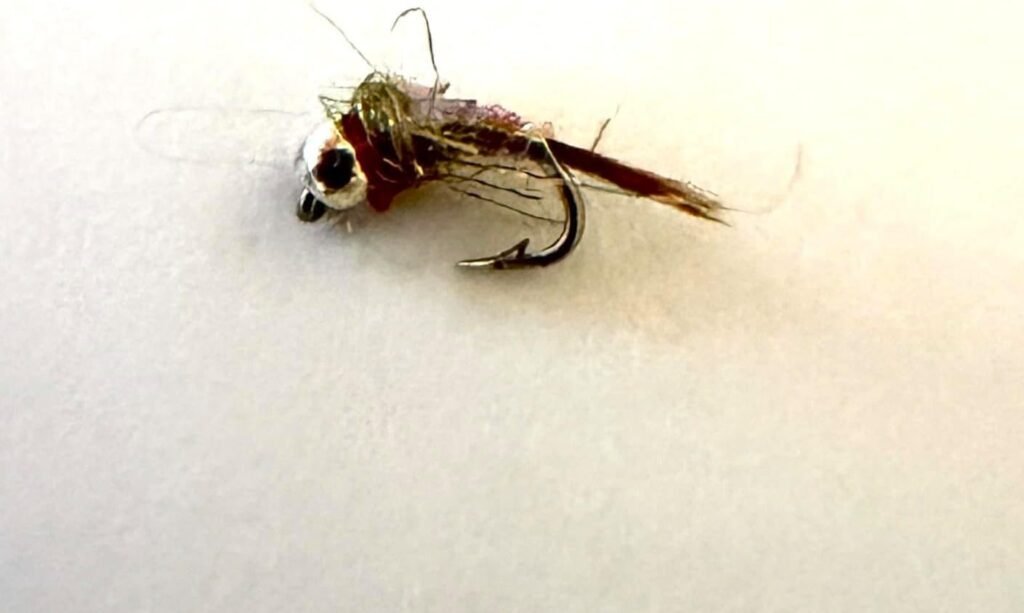
Nymph
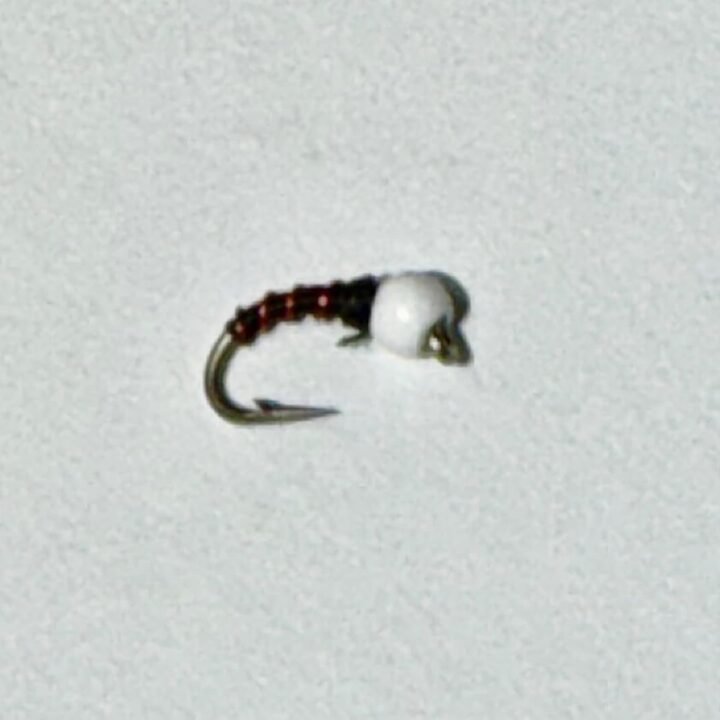
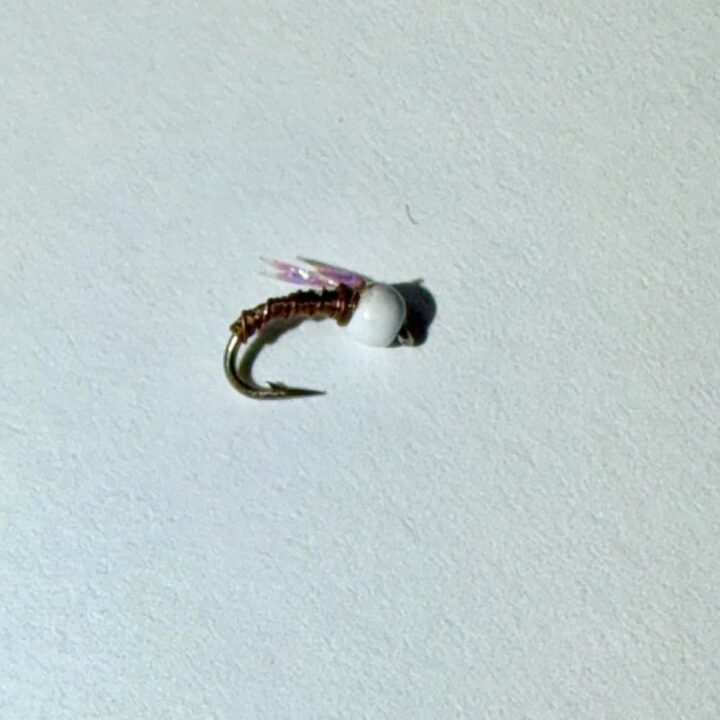
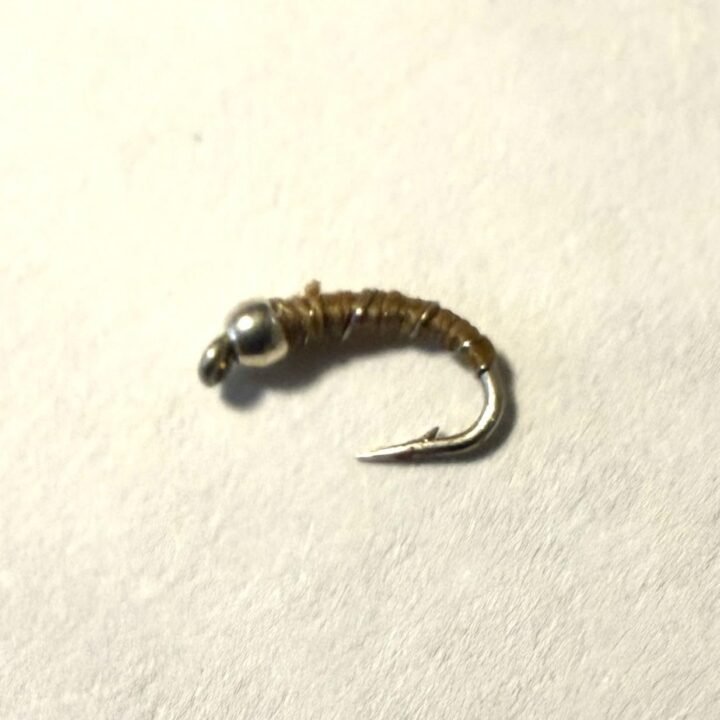
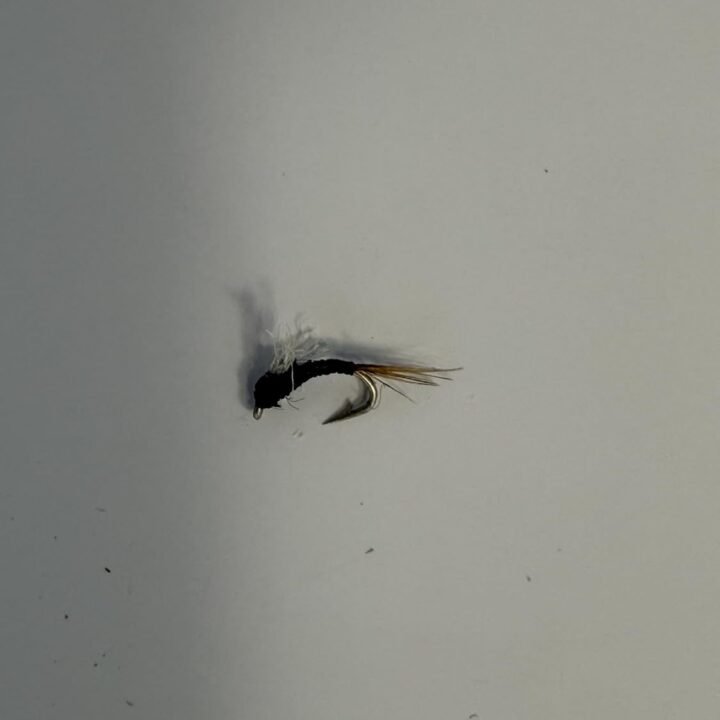
Lance Egan’s pearl-bodied attractor — small, bright, and unreasonably good on hard-fished water.
Available at Amazon and Walmart
How to fish it
Fish it on either dropper. Change to it when a natural nymph has been drifted through good water twice without a take — the switch from imitation to attractor often produces immediately.
Use it as a test rather than a staple. When natural imitations have been drifted twice through water you are confident holds fish, putting this on for two drifts answers a question quickly: if the fish were there and simply had not seen the fly, this usually finds out. If it draws nothing either, move.
It fishes as an anchor as well as a dropper, because the bead is heavy for the hook. That makes it useful on a short rig in shallow riffles where you want depth without weight on the leader — and it is one of the few small attractors worth fishing on a freestone river as well as a tailwater.
Lance Egan’s pearl-bodied attractor — small, bright, and unreasonably good on hard-fished water.
The Rainbow Warrior should not work as well as it does. It is a pearl flash body with a silver bead and a rainbow dubbing thorax, and it looks like nothing that lives in a river — yet on the most pressured tailwaters in the country it out-fishes careful imitations regularly.
The best explanation is that at size 20 it reads as a midge pupa with a gas bubble. Whatever the reason, it belongs in the box.
It is worth being honest that this fly imitates nothing. It is a pearl body, a silver bead and a rainbow thorax, and no insect in a trout river looks like that. What it seems to do at size 20 is read as a midge pupa carrying gas under the shuck, which is a real thing trout eat constantly — but that is a theory built after the fact to explain a fly that was already working.
More patterns