Dry Fly
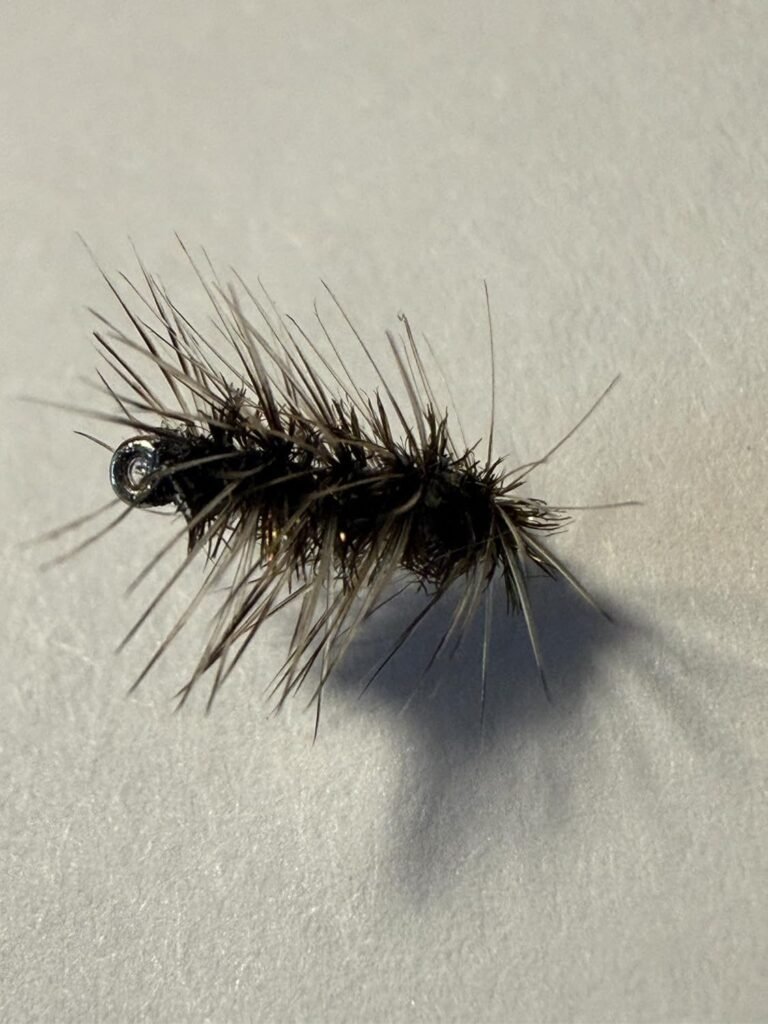
Griffith’s Gnat
A midge cluster in one fly — for the rises that no single midge will explain.
Available at Amazon and Walmart
- Hook size
- 20
- Imitates
- Midge
- Best water
- Spring Creek, Tailwater
- Colour
- Black
- Pack
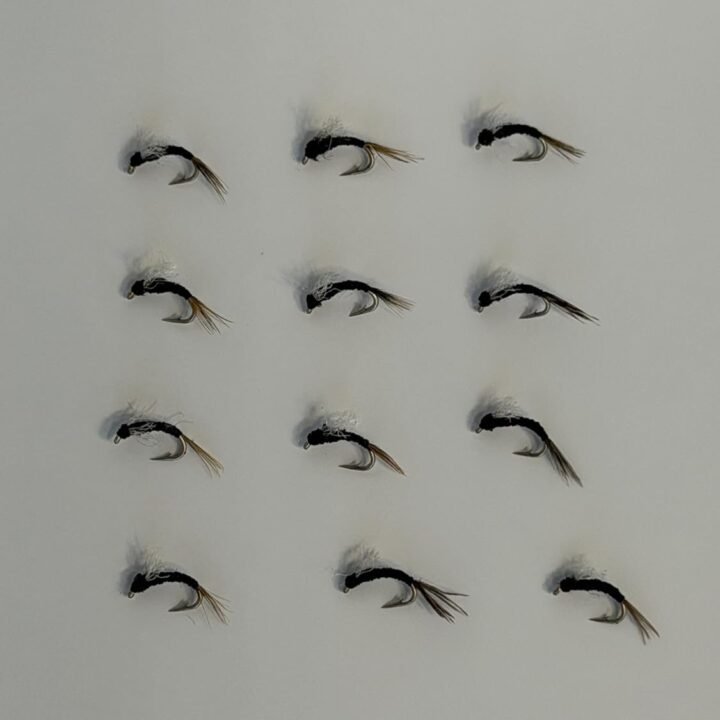
- 12 flies
Fishes for
Brown TroutGraylingRainbow Trout
How to fish it
Fishing notes
Long leader, fine tippet — 6X or 7X — and a drift with no drag at all. Fish it to a specific rising fish rather than searching. If you cannot see it, watch the area and set on any rise within a foot of where it should be.
You will lose sight of it, and that is normal at size 20 on flat water. Fish it to one specific rising trout so you know where it should be, and set on any rise inside a foot of that spot. Setting on a fish that turns out not to have your fly costs you a cast; not setting costs you the only take you were going to get.
When a fish refuses it twice, try sinking the fly rather than changing it. Greasing the hackle but not the body drops the abdomen a fraction and turns a floating cluster into a drowned one, which is what a trout sipping quietly with no bulge is usually eating. Failing that, go to 7X — in this water tippet diameter matters more than pattern.
About this fly
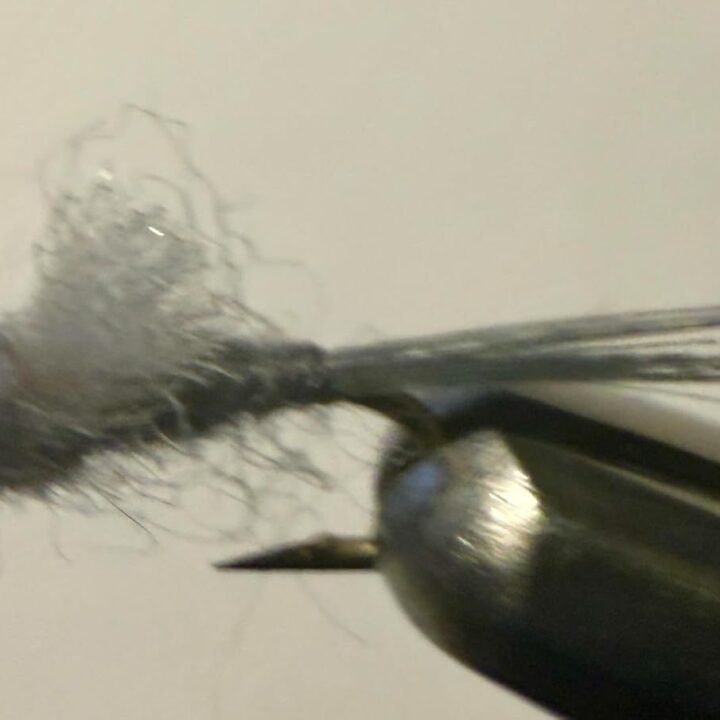
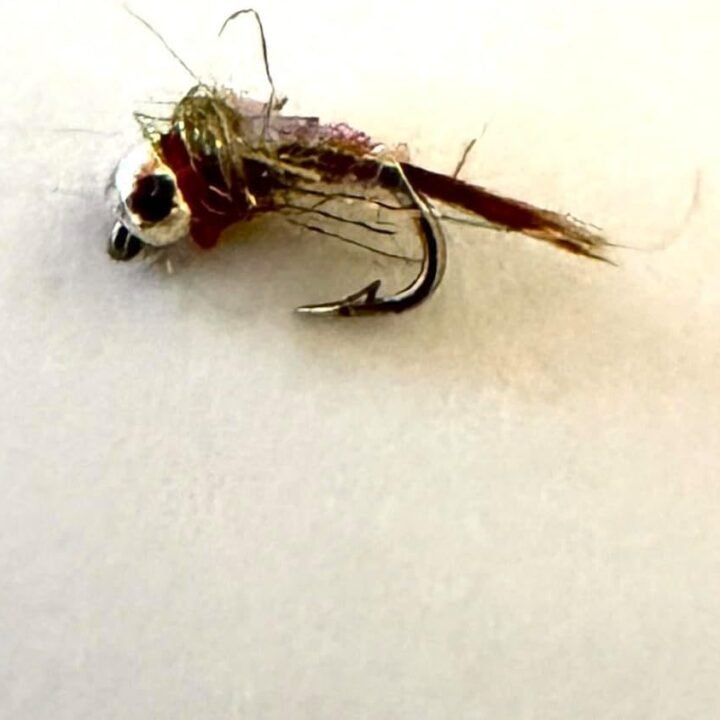
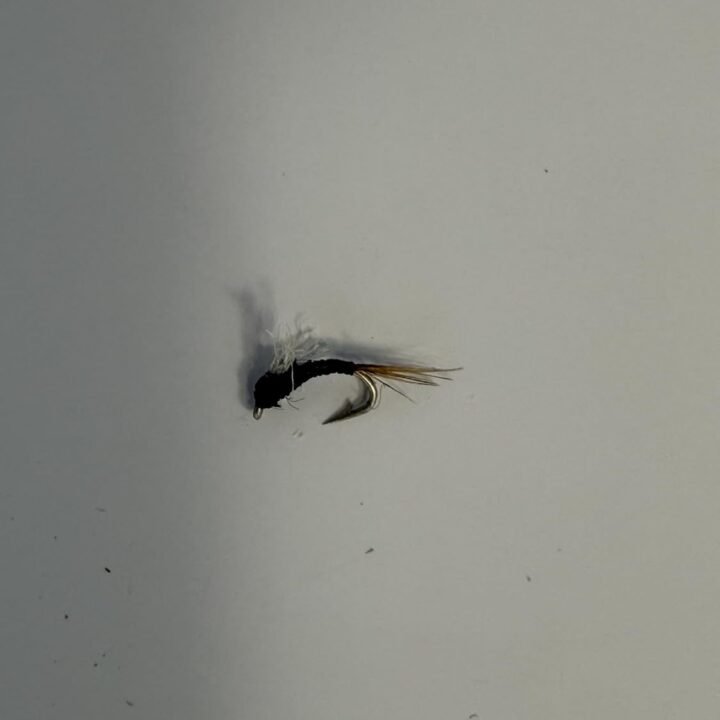
A midge cluster in one fly — for the rises that no single midge will explain.
When trout sip steadily in flat water and nothing you tie on works, they are usually eating clustered midges rather than singles. George Griffith’s pattern — peacock herl body, grizzly hackle palmered over it — is a scruffy little ball that reads as several midges tangled together in the film.
It is a winter and early-spring fly on tailwaters and spring creeks, and one of the very few dries worth carrying in January.
Clustered midges are a real event, not a theory. On a cold still morning the adults mate on the surface in tangled knots of three or four, and a trout that would have to rise thirty times for singles can take one clump and be done with it. That is why fish will refuse a perfectly good single midge for an hour and then eat a scruffy ball of hackle without hesitating.
Key features
- Imitates a cluster of midges, not a single insect — which is what fish eat
- Palmered grizzly hackle over peacock herl gives the scruffy, tangled profile
- Size 20 for flat-water sippers on tailwaters and spring creeks
- One of the few dry flies that produces through winter
- The answer to steady, quiet rises with no visible hatch
More patterns
Fish these alongside it