
Fishing Notes
Fishing the Blue-Winged Olive Hatch
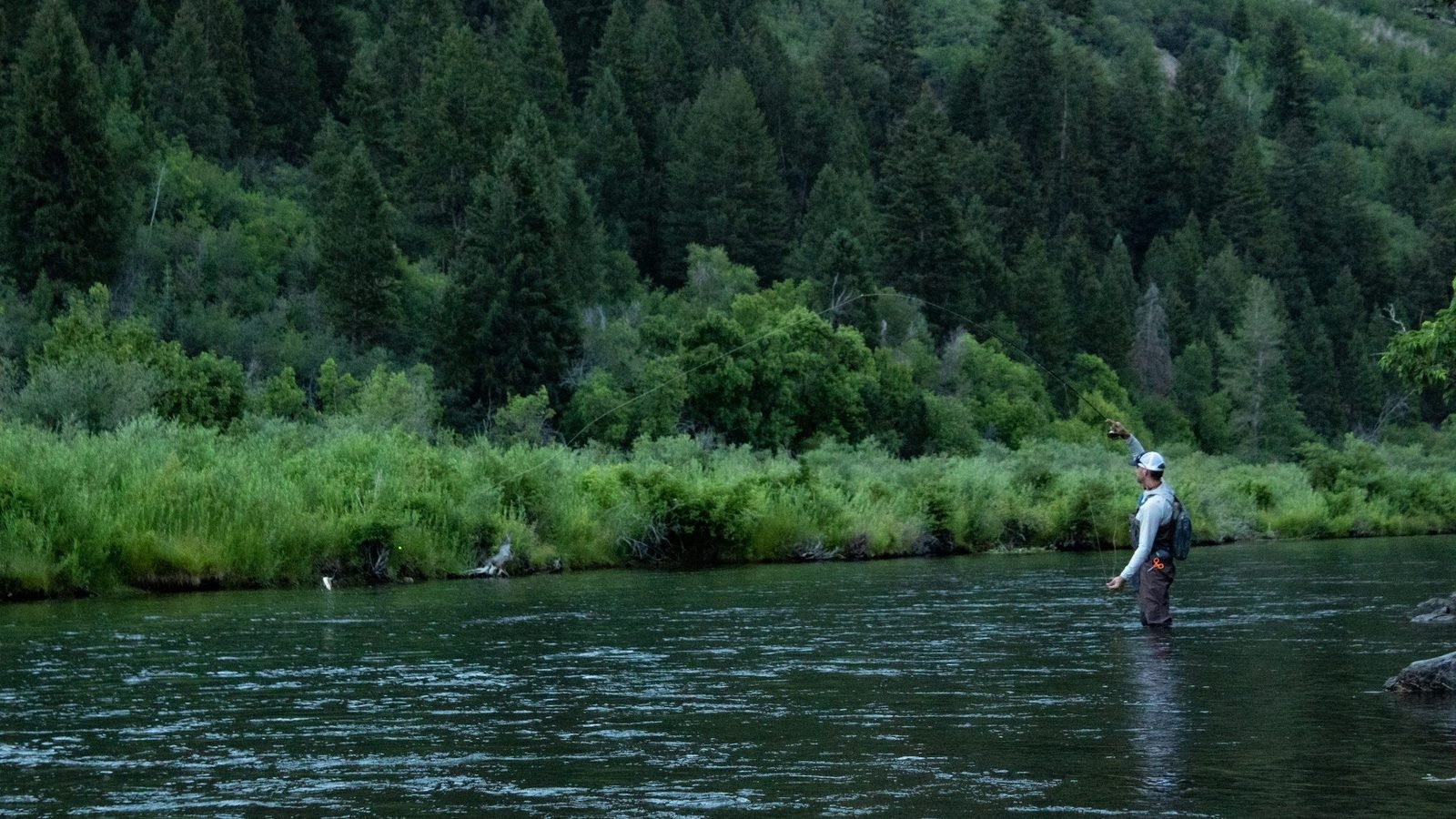
The best mayfly fishing of the year happens on the days you would rather stay in the truck. Blue-winged olives hatch in cold, flat, overcast weather — drizzle, low light, a bit of wind — and trout feed on them with a confidence they rarely show in bright sun.
Blue-winged olive is a catch-all name for the Baetis mayflies, and they matter more than their size suggests. They hatch twice a year in most trout water, in autumn and again in spring, and on many tailwaters they are the only significant mayfly a trout sees between the summer and the following season. They are small, usually a size 16 down to a 22, and they are grey-olive in a way that is very hard to see on the water and very easy for a trout to recognise.
Why the weather matters
Mayfly duns need to dry their wings before they can fly off the surface. On a warm, bright day that takes seconds. On a cold, damp, overcast day it can take a long ride down the river — sometimes a hundred feet or more of drifting helplessly in the film.
That is the whole reason blue-winged olive fishing is good in bad weather. The insect is stuck on the surface for longer, so the trout gets a longer and more reliable look, and it will move into shallower, softer water to take advantage. A river that looked empty at noon in the sun can have twenty fish working a single foam line by three o’clock under cloud.

Read the rise before you tie anything on
Most blue-winged olive frustration comes from fishing the dun when trout are eating the emerger. The rise form tells you which, and it is worth two minutes of watching before you make a cast.
- A clean, deliberate sip that leaves a bubble. The fish took something off the top and broke the surface film to do it. That is a dun. Fish the Blue Wing Olive Parachute.
- A gentle bulge, or a dorsal and tail showing with no bubble. The fish never broke the surface. It is eating emergers hanging in the film, and it will refuse a dun all afternoon. This is by far the more common case.
- Nothing showing at all, but fish flashing subsurface. The hatch has not started. They are eating nymphs as the naturals get active and drift.
The bubble is the tell worth remembering. A trout that takes something off the surface takes a little air with it, and that air comes back up as a bubble in the ring. No bubble means no surface take, no matter how much the rise looked like one.
The emerger is the fly that catches fish
If you only carry one blue-winged olive pattern, carry an emerger. The Barr's Emerger was designed for exactly this problem — a slim, sparse silhouette with a trailing shuck that sits half-drowned rather than perched on top. It looks wrong in the hand and right on the water, which is true of most good emergers.
The Pat Dorsey RS2 does the same job with an even simpler outline, and has been the standard on western tailwaters for decades. During an active emergence, the RS2 Sparkle Wing often out-fishes the plain version — the sparkle imitates the bubble of gas trapped under the shuck of an insect that is actually hatching. Once the hatch tails off, the plain grey version goes back to being the better fly. Carry both; the difference is small on the vice and large on the water.
Rigging an emerger you cannot see
A size 20 emerger in the film is invisible at any distance. Two ways round it:
- Grease the leader, not the fly. Floatant to within about six inches of the fly, nothing on the fly itself. The leader floats, the fly hangs in the film, and you watch the leader tip for any hesitation.
- Trail it behind a dry. Eighteen inches of tippet off the bend of a Parachute Adams, and watch the dry. Any rise within a foot of it is worth setting on. You will occasionally catch one on the Adams, which is a bonus rather than the plan.
Before the hatch, fish the nymph
Baetis nymphs get restless in the hour or two before an emergence, and a lot of them end up in the drift. That window is often better fishing than the hatch itself, and it is far more forgiving — the fish are not yet locked onto a single stage.
A Pheasant Tail Nymph is the honest imitation: pheasant fibre and copper wire, no flash, exactly the silhouette of the natural. When the water is a little off-colour or moving faster, the Flashback Pheasant Tail gives the fish something to find. For the most pressured water, the Juju Baetis has a translucence at size 20 that dubbed patterns cannot match, and the Chocolate Thunder keeps a natural profile while carrying just enough flash to register in stained flows.
Tippet and drift
Go finer than feels comfortable. Blue-winged olive fish are usually in slow, smooth water where they get a long look, and 6X is a sensible default with 7X in reserve. The fly matters less than the drift: a size 18 dun with no drag beats a perfectly matched size 20 dragging an inch.
Cast to individual fish rather than covering water. Olive feeders are rhythmic — watch one for three or four rises, work out its timing, and put the fly a couple of feet above it so it arrives on the beat.
The short version
- Fish the ugly days. Cold and overcast is the forecast you want.
- Watch the rise for a bubble before choosing a fly.
- Assume the emerger until the fish proves otherwise.
- Fish the nymph in the hour before anything shows on top.
- Fine tippet, long drift, one fish at a time.

